

Updated April 202610 min readWritten for US readers
Acrylic nails look gorgeous — until removal day. Whether your set has grown out, lifted, or you’re just ready for a change, knowing how to remove acrylic nails properly makes all the difference between healthy nails and damaged ones.
So many people end up peeling or prying their acrylics off out of frustration, not realizing this is one of the fastest ways to damage your nail bed. The good news? You don’t need to rush to a salon every time. With the right steps, you can learn how to remove acrylic nails at home safely, without expensive appointments or wrecking your natural nails.
This guide walks you through everything — from the classic acetone soak to acetone-free alternatives — so you can take off your acrylics with confidence.
What You’ll Need Before You Start
Whether you’re heading to the salon or doing this yourself, preparation is everything. Rushing this step is how most nail damage happens. Gather your supplies first:
- 100% pure acetone (regular nail polish remover won’t be strong enough)
- A nail file or nail clippers
- A glass or ceramic bowl (acetone can dissolve plastic)
- Petroleum jelly or cuticle oil to protect your skin
- Aluminum foil or cotton balls
- A wooden cuticle pusher or orangewood stick
- A moisturizing hand cream or nail strengthener for after
Pro TipNever use a plastic bowl with acetone — it will melt or warp. Always go with glass or ceramic.
How to Remove Acrylic Nails at Home: The Acetone Soak Method
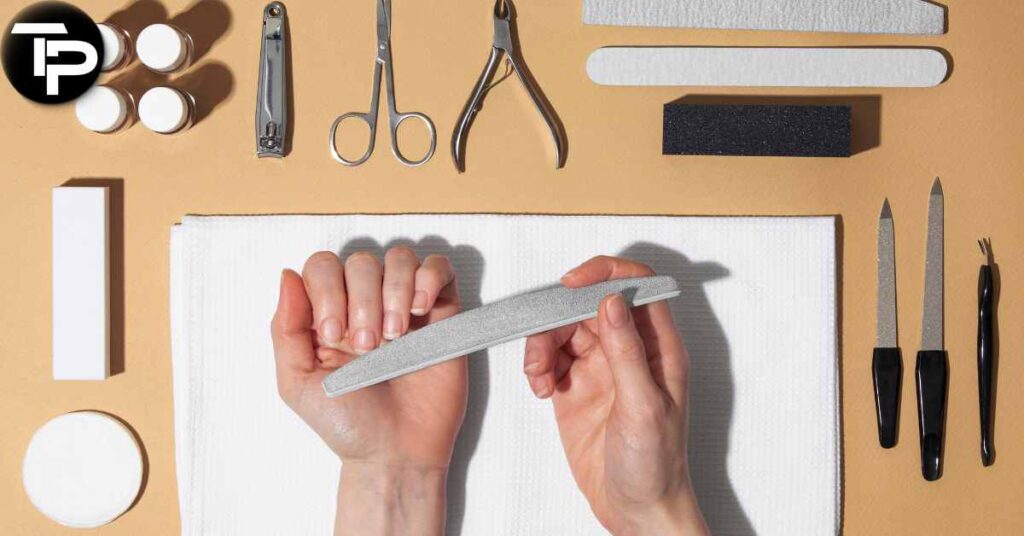
This is the most reliable method for how to soak off acrylic nails. It’s the same technique most nail technicians use in salons. Just be patient — rushing leads to broken nails.
- Trim and file down the acrylics.Use nail clippers to cut your acrylics as short as possible, then file the top surface to break the topcoat seal. You’re not filing all the way down — just enough to rough up the surface so acetone penetrates faster.
- Protect your skin.Apply a thin layer of petroleum jelly around each nail and on your cuticles. Acetone is drying, and this acts as a barrier for your skin.
- Soak in acetone.Pour enough 100% acetone into a glass bowl to cover your fingertips. Submerge your nails and soak for 20–30 minutes. You’ll notice the acrylic beginning to soften and lift at the edges.
- Gently push off the acrylic.Use a wooden cuticle pusher to gently slide the softened acrylic off. If it doesn’t move easily, soak for another 10 minutes. Never force it.
- Buff and moisturize.Once all the acrylic is off, lightly buff your nail surface, then apply cuticle oil and a rich hand cream immediately. Your nails will be dry — give them a good drink of moisture.
The Foil Wrap Method — Great for How to Get Acrylic Nails Off One Hand at a Time
If soaking both hands at once feels awkward, the foil wrap method gives you more control and is gentler on your skin. It’s especially popular for people doing this solo.
Best for beginners
Foil Wrap Method
Saturate a cotton ball with acetone, press onto nail, wrap in foil. Wait 25–30 min, slide off. Do one hand at a time.
Fastest
Bowl Soak Method
Both hands submerged in acetone at once. Ideal if you have help. 20–30 min soak. Best for multiple nails at once.
Acetone-free
Dental Floss Method
Best for lifted acrylics only. Slip floss under the edge and slide across. Only works if the acrylic is already detaching.
For the foil method: soak a cotton ball in acetone, press it flat against your nail, and wrap the fingertip tightly with a small piece of aluminum foil. Repeat on all fingers, then wait about 25 minutes. Unwrap one finger — if the acrylic slides off easily with gentle pressure, you’re good. If not, re-wrap and wait another 10 minutes.
How to Take Off Acrylic Nails Without Acetone

Acetone-free removal is possible but slower, and it only really works well when nails are already lifting. Here are a few options if you’re avoiding acetone:
- Warm water soak: Soak fingers in warm, soapy water for 20 minutes to soften the adhesive, then very gently try to lift edges with a cuticle pusher. This works best on older sets that have already started to come off naturally.
- Non-acetone nail polish remover: Much weaker than acetone, but soaking for 30–40 minutes can loosen the bond on thinner acrylic sets.
- Nail e-file or drill (advanced): Professional nail techs use electric files to file down acrylics without acetone. Not recommended for beginners at home without training.
- Let them grow out: Not the most glamorous answer, but if your nails are healthy, simply filing and letting the acrylic grow out as your natural nail grows is the safest option of all.
Important WarningNever pry, pick, or rip off acrylic nails — even if they’re lifting. This tears the top layers of your natural nail and can cause long-term thinning and sensitivity.
After Removal: How to Restore Your Nails

Here’s what nobody talks about enough — the aftercare. Acrylic removal leaves your nails temporarily thinner and dehydrated. What you do in the days after removal matters a lot.
- Apply cuticle oil twice a day for at least a week
- Use a nail strengthener (like OPI Nail Envy or Essie Strong Start) to support regrowth
- Keep your nails short and filed smooth to prevent snagging
- Wear gloves when washing dishes or cleaning with harsh products
- Give your nails at least 2–3 weeks of rest before reapplying acrylics
When to See a Nail Technician Instead
While DIY removal is totally doable, there are a few situations where it’s better to let a professional handle it:
- Your nail or surrounding skin is infected, red, or swollen
- The acrylic has broken near the nail bed and you’re in pain
- You notice significant nail lifting or separation from the bed
- You’re dealing with an allergic reaction to the acrylic product
A licensed nail tech can remove acrylics in about 20–30 minutes at most salons, and it’s often worth the cost if you have a complicated situation or your nails are already showing signs of damage.
FAQs: How to Remove Acrylic Nails
QHow long does it take to remove acrylic nails at home?
Most at-home removal takes 30–45 minutes from start to finish. The actual soak time is 20–30 minutes; the rest is prep and cleanup. Don’t rush it — the longer you soak, the easier the acrylic slides off without damage.
QCan I remove acrylic nails without acetone?
Yes, but it’s slower and less effective. Warm water soaks and non-acetone removers can loosen the bond over time, especially on older, lifting sets. Pure acetone is significantly more effective and is recommended for full sets.
QDoes removing acrylic nails hurt?
It should not hurt if done correctly. If you feel pain while pushing the acrylic off, stop and soak longer. Pain is a sign the acrylic is still firmly bonded to your nail — forcing it causes the real damage.
QHow do you soak off acrylic nails fast?
File the surface down first to remove the topcoat — this is the biggest time saver. Then soak in 100% acetone (not regular nail polish remover). Warm acetone works faster than room temperature, so you can set your bowl in warm water to speed things up slightly.
QHow often should I remove and replace acrylic nails?
Most nail professionals recommend getting a fill every 2–3 weeks and a full removal every 2–3 months. Constantly wearing acrylics without breaks can lead to thinning, brittleness, and increased risk of fungal growth under the nail.