
Table of Contents
You pulled back your sheets and saw them. Small, reddish-brown, fast-moving. Your stomach dropped. Now you are standing in the cleaning aisle at Walmart, can of Lysol in hand, wondering — does Lysol kill bed bugs or are you about to waste your time?
Here is the straight answer: Lysol can kill bed bugs on direct contact, but it will not solve your infestation. Not even close. There is a big difference between killing a bug you can see right in front of you and actually eliminating a colony hiding inside your mattress, walls, and baseboards.
This guide gives you the full picture — what Lysol actually does to bed bugs, why it fails as a real solution, what works better, and how to protect your home for good.
Does Lysol Kill Bed Bugs on Direct Contact?
Yes, technically. Lysol is a disinfectant that contains ethanol and other chemical compounds. When you spray it directly on a bed bug and drench it completely, those chemicals disrupt the bug’s outer waxy layer — the cuticle — and eventually kill it.
That sounds promising. The problem is that bed bugs are not sitting out in the open waiting to be sprayed. They hide. Deep inside mattress seams. Behind outlet covers. Inside the hollow legs of your bed frame. In the cracks of your walls. You are never going to reach all of them with a spray can.
Think of it this way — spraying Lysol on one visible bed bug is like pulling one weed from a garden that has hundreds of roots underground. You feel like you did something. You did not fix anything.
What the Chemical Actually Does
Lysol works as a contact killer. That means it has to physically touch the insect to do any damage. It does not leave behind a residual effect that keeps killing bugs after it dries. Once the spray evaporates, it offers zero ongoing protection against new bugs crawling through the same area an hour later.
Compare that to professional-grade pesticides designed for bed bugs, which often work as repellents or residual killers — meaning they stay active on surfaces for weeks and kill bugs that walk across treated areas long after the initial application.
Does Lysol Spray Kill Bed Bugs Hidden in Mattresses and Furniture?
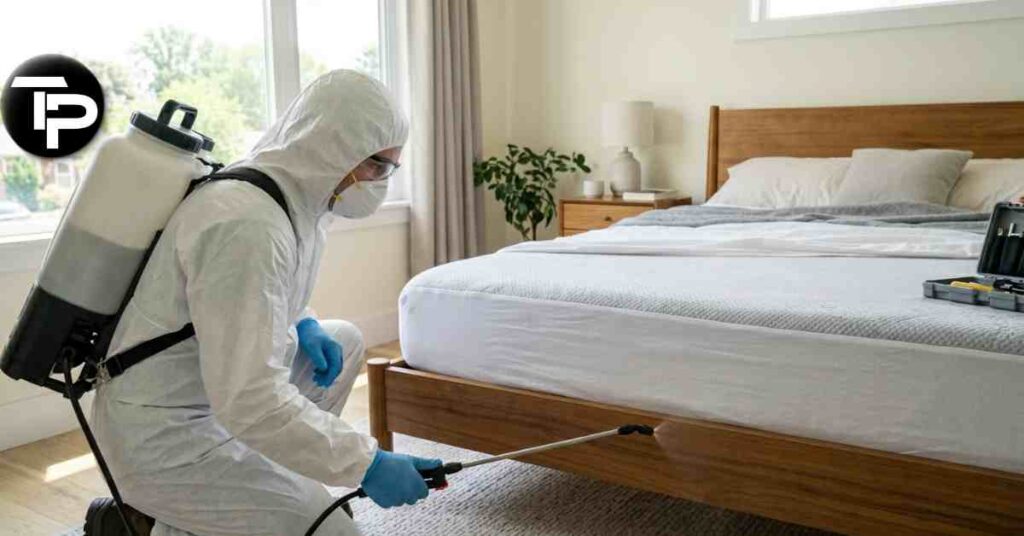
This is where the real problem lives. Does Lysol spray kill bed bugs that are tucked inside your mattress? No — not the ones hiding in the inner layers of foam or fabric where the spray never reaches.
A single adult female bed bug can lay one to five eggs per day. Those eggs are hidden in spots so small and so deep that a spray nozzle has no chance of reaching them. You could empty an entire can of Lysol on your mattress and still have a full-blown infestation two weeks later because the eggs survived and hatched.
Lysol also does not penetrate deep enough into furniture seams, box springs, or behind wall trim to reach the bugs sheltering there. They sense the moisture, move deeper, and come right back out after the spray dries.
Surface vs. Deep Infestation
If you have a very early, tiny infestation — maybe three or four bugs on the visible surface of a piece of furniture — Lysol spray might kill the ones you can see. That is the only scenario where it is even partially useful.
Anything beyond that needs heat treatment, professional-grade insecticides, or a licensed pest control company. No household spray will handle a real infestation on its own.
Does Lysol Disinfectant Spray Kill Bed Bugs Better Than Other Household Products?
People ask this because they assume the “disinfectant” label means stronger killing power. Does Lysol disinfectant spray kill bed bugs better than rubbing alcohol or other cleaners? Not significantly.
Rubbing alcohol (isopropyl alcohol at 91% or higher) actually works faster as a contact killer than Lysol because of its higher alcohol concentration. It also dries faster and is less likely to stain your mattress or furniture. If you are going the DIY spray route for spot treatment, isopropyl alcohol outperforms Lysol for direct contact kills.
But both share the same fundamental flaw — they only kill what they directly touch. Neither eliminates eggs. Neither penetrates deep hiding spots. Neither has any residual effect. For a real infestation, both are temporary at best.
Why People Keep Reaching for Lysol
Because it is what people have at home. It is familiar. It smells clean and powerful. And when you are panicking at midnight about bugs in your bed, you want to do something immediately. That impulse is completely understandable.
Just do not let it replace actual treatment. Use Lysol if it makes you feel better in the moment. Then get serious about fixing the problem the right way.
Does Lysol Kill Bed Bug Eggs?
This is the most important question of all — and the answer is no. Does Lysol kill bed bug eggs? Not effectively.
Bed bug eggs have a hard, protective outer shell that resists most household chemicals. Even if you spray Lysol directly on a visible egg, the chemical usually cannot penetrate the shell before it evaporates. The egg survives, hatches in six to ten days, and you are right back where you started.
This is the single biggest reason why Lysol fails as a bed bug solution. You might kill some visible adults. But as long as eggs survive, the infestation continues. Killing adults without killing eggs is the definition of a temporary fix.
What Actually Kills Bed Bug Eggs
Heat is the most reliable egg killer. Bed bug eggs die when exposed to temperatures above 120 degrees Fahrenheit for at least 90 minutes. Professional heat treatment raises the entire room to these temperatures, killing eggs hidden in every corner, crack, and layer of fabric simultaneously.
Some professional-grade insecticides also contain insect growth regulators that prevent hatched nymphs from reaching adulthood. These are not available in stores — they require a licensed pest control applicator.
What Actually Works Against Bed Bugs
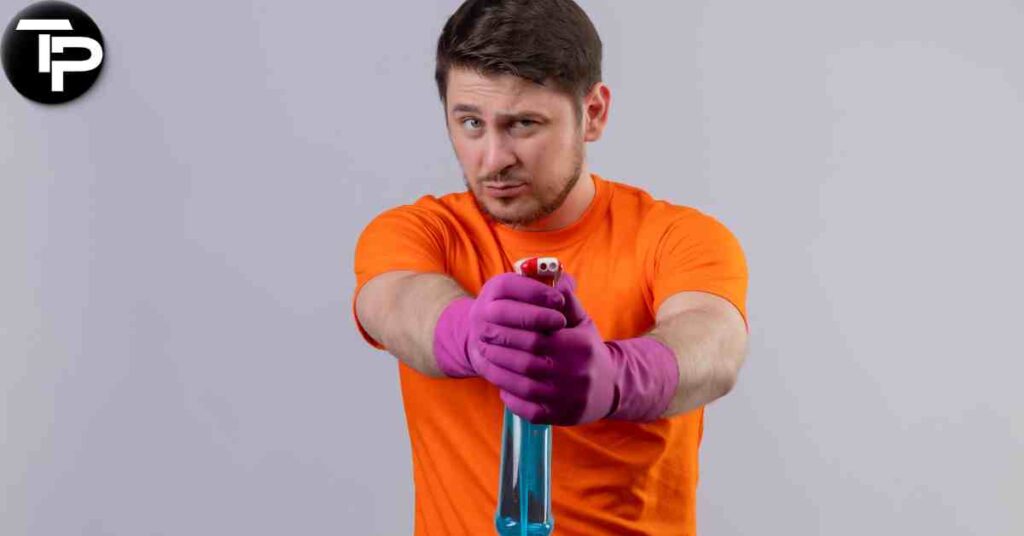
If Lysol is not the answer, what is? Here is what pest control professionals and university entomologists consistently recommend for US households dealing with bed bugs.
Heat Treatment
Professional heat treatment is currently the most effective single method for eliminating bed bugs and their eggs. Pest control companies bring in industrial heaters that raise your entire home or affected rooms to temperatures lethal to bed bugs at every life stage. No chemicals. No residue. Eggs, nymphs, and adults all die in one treatment.
The downside is cost — heat treatment typically runs $1,000 to $3,000 for a whole home depending on size and location. For severe infestations, it is usually worth every dollar.
Encasements and Interception Devices
Mattress encasements seal your mattress completely, trapping any bugs inside and preventing new ones from getting in. Combined with bed bug interceptors placed under each bed leg, you cut off the bugs’ access to their food source — you.
These are not elimination tools on their own, but they are essential parts of a complete treatment plan and help you monitor whether the infestation is shrinking over time.
Professional Insecticide Application
Licensed pest control companies use a combination of contact sprays, residual insecticides, and dusts like diatomaceous earth or silica gel to treat every crack, seam, and hiding spot in a room. These products work very differently from Lysol — they have days or weeks of residual activity and are specifically tested against bed bug populations.
- Diatomaceous earth — a fine dust that damages bed bugs’ outer layer and causes dehydration over time
- Silica gel dust — works similarly to diatomaceous earth but is more effective in humid conditions
- Residual pyrethroids — professional sprays that kill on contact and remain active on surfaces for weeks
- Steam treatment — 212-degree steam applied directly to mattress seams, furniture, and baseboards kills bugs and eggs on contact
What to Do Right Now If You Have Bed Bugs
If you just discovered bed bugs, do not panic. Take these steps in order and you will get this under control.
- Strip your bed immediately and wash all bedding in hot water — at least 120 degrees. Then dry on the highest heat setting for at least 30 minutes
- Bag and seal clothing, stuffed animals, and soft items from the affected room. Wash or heat-dry everything possible
- Vacuum your mattress, box spring, bed frame, and surrounding floor thoroughly. Seal and throw away the vacuum bag immediately after
- Install mattress and box spring encasements as soon as possible
- Place bed bug interceptor traps under all four bed legs
- Move the bed away from the wall and make sure no bedding is touching the floor
- Call a licensed pest control company for an inspection — most offer free assessments
Do not sleep in a different room thinking it will help. Bed bugs will follow you. Stay in the treated area so they remain contained to one location.
Frequently Asked Questions
Does Lysol kill bed bugs if you spray them directly?
Yes, Lysol can kill a bed bug on direct contact by disrupting its outer protective layer. But this only works on bugs you can physically see and drench with the spray. It has zero effect on bugs hiding inside furniture, walls, or deep mattress seams — which is where the majority of any infestation lives.
Does Lysol spray kill bed bugs the same way professional sprays do?
No. Lysol is a surface disinfectant with no residual pesticidal activity. Professional bed bug sprays are specifically formulated to remain active on surfaces for weeks and to penetrate hiding spots that Lysol cannot reach. Lysol kills by contact only and stops working the moment it dries.
Does Lysol disinfectant spray kill bed bugs better than rubbing alcohol?
Not really. High-concentration rubbing alcohol — 91 percent or higher — is actually a faster contact killer than Lysol because of its higher alcohol content. Both share the same fatal limitation: they kill only on direct contact, leave no residual protection, and cannot eliminate eggs. Neither is a real solution for an active infestation.
Does Lysol kill bed bug eggs hiding in mattress seams?
No. Bed bug eggs have a tough protective shell that resists most household chemicals, including Lysol. Even direct contact rarely penetrates the egg casing before the spray evaporates. Heat treatment above 120 degrees Fahrenheit for 90 minutes is the most reliable way to destroy bed bug eggs at every stage.
How long does Lysol take to kill a bed bug?
On full direct saturation, Lysol can kill a bed bug within a few minutes. But the timing is largely irrelevant because real infestations are never limited to the few bugs you can see. By the time you spot adult bed bugs, there are already dozens or hundreds more hiding out of sight, along with eggs at various stages of development.
The Bottom Line on Lysol and Bed Bugs
Does Lysol kill bed bugs? On the surface, yes — literally. It can kill a bed bug you spray directly. But an infestation is never just the bugs you can see. It is the eggs. The nymphs. The hundreds hiding in places no spray can reach.
Lysol gives you the feeling of doing something without actually solving anything. That feeling can be dangerous because it delays the real treatment you actually need. Every day you spend reaching for a disinfectant spray is another day the infestation grows deeper into your home.
Use Lysol if it helps you cope in the moment. But make the call to a pest control professional at the same time. Get an inspection. Get a quote. Get a real plan. Bed bugs do not go away on their own, and no household cleaner in any cabinet in America is going to make that happen.
The sooner you stop looking for a quick fix and start treating the actual problem, the sooner you get your bedroom — and your sleep — back.