
Table of Contents
You finally decided to wash that wool blanket that has been piling up on your couch all winter. You toss it in the machine, hit start, and pull out something that now fits a toddler. Sound familiar? Knowing how to wash wool blanket correctly is the difference between keeping a quality piece for decades and replacing it after one bad laundry day.
Wool is not like cotton. It is a natural protein fiber that reacts badly to heat, rough agitation, and the wrong detergents. But with the right approach, washing a wool blanket at home is completely doable — no dry cleaner required.
This guide covers everything from reading care labels to drying without distortion, with specific tips for military surplus wool blankets, surplus wool blankets, and delicate alpaca wool blankets.
Before doing anything else, take a look at the care label.
This sounds obvious. Most people skip it. Do not skip it.
The care label on your wool blanket is not decoration. It tells you exactly what the manufacturer tested and approved. A label that says “dry clean only” means the wool is likely too delicate or too loosely woven to survive machine washing without serious damage.
If the label says “hand wash” or “machine wash cold gentle,” you have options. If there is no label — common with vintage pieces, military surplus wool blankets, and thrifted finds — you need to do a quick spot test before committing to a full wash.
How to Spot Test an Unlabeled Wool Blanket
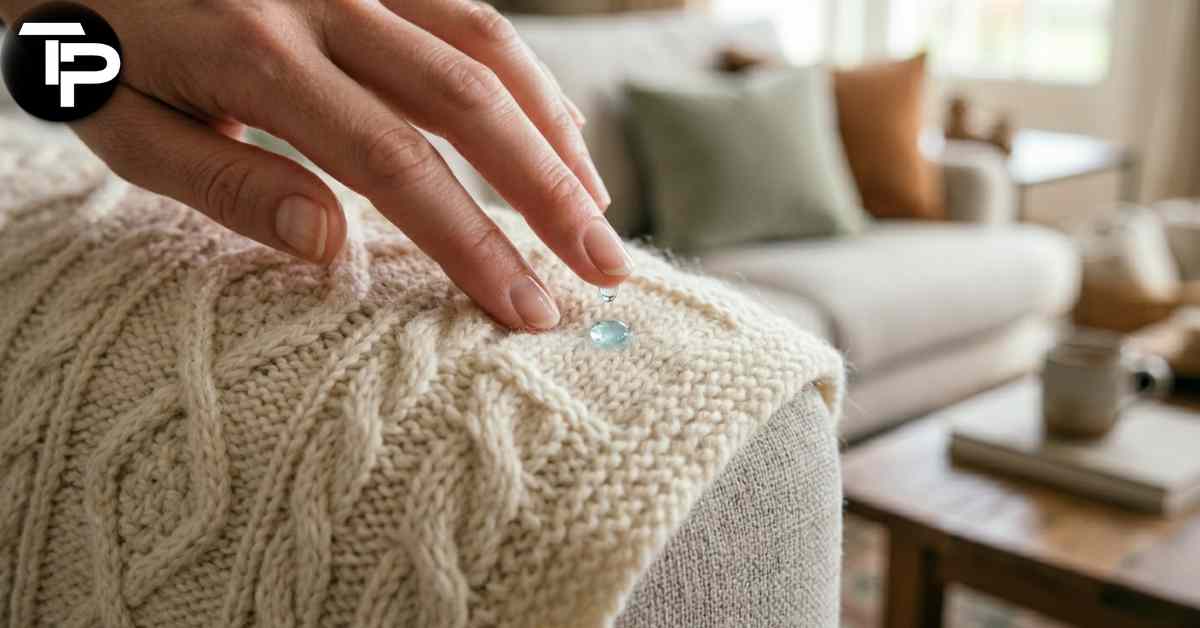
Wet a small corner of the blanket with cold water and a drop of wool-safe detergent. Gently rub the fibers together. If the fabric holds its shape, the color does not bleed, and the texture looks the same after drying, you are safe to proceed with a full wash.
If the fibers start to mat together or the color runs, stop. That blanket needs professional dry cleaning or very careful hand washing with no agitation at all.
How to Wash a Wool Blanket in the Washing Machine
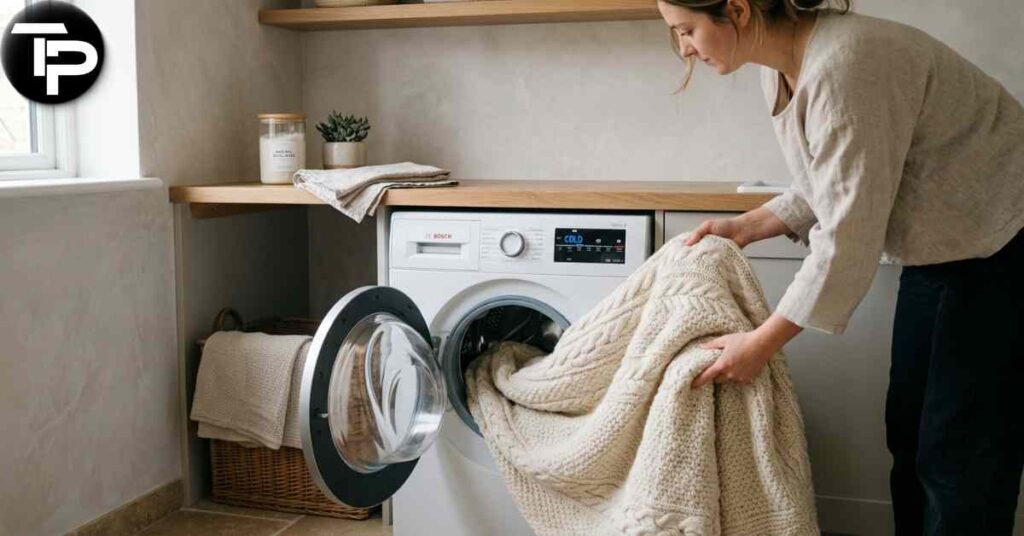
Machine washing is possible for most wool blankets — but only under very specific conditions. Get one step wrong and you end up with felt instead of a blanket.
Machine Settings That Actually Matter
- Use the wool cycle or delicate cycle — never a normal or heavy-duty cycle
- Set the water temperature to cold — even lukewarm water can cause shrinkage
- Choose the lowest spin speed available — high spin agitates fibers and causes felting
- Use a mesh laundry bag if your blanket fits — it reduces friction during the wash cycle
- Never wash wool with regular detergent — it strips lanolin and damages the fiber structure
Use a detergent specifically labeled for wool or delicates. Brands like Woolite, The Laundress Wool and Cashmere Shampoo, or Eucalan are widely available at US grocery and home stores. A small amount goes a long way — about one tablespoon for a full blanket.
What Happens If You Use the Wrong Cycle
Wool fibers have microscopic scales along their surface. When exposed to heat and agitation simultaneously, those scales lock together permanently — a process called felting. Once it happens, there is no reversing it. The blanket will be stiffer, smaller, and denser than when you started.
Cold water and gentle agitation keep those scales from interlocking. That is the entire science behind washing wool safely.
How to Hand Wash a Wool Blanket the Right Way

Hand washing gives you the most control and is the safest method for any wool blanket — especially a delicate alpaca wool blanket, which has a softer fiber structure that machine washing can easily damage.
Step-by-Step Hand Wash Process
- Fill a clean bathtub or large basin with cold water — enough to fully submerge the blanket
- Add one to two tablespoons of wool-safe detergent and swirl gently to dissolve
- Submerge the blanket completely and press it down into the water — do not wring or twist
- Let it soak for 15 to 30 minutes, gently pressing the water through the fibers every few minutes
- Drain the soapy water and refill with clean cold water for rinsing
- Press the blanket gently to release soapy water — never wring or squeeze aggressively
- Repeat the rinse once more until no suds remain
The whole procedure ought to take around 45 minutes. It is worth every minute compared to the alternative of ruining a quality blanket.
Removing Excess Water Without Damage
Never twist a wet wool blanket to remove water. The fibers are at their most vulnerable when wet and twist pressure causes permanent distortion.
Instead, gently press the blanket against the side of the tub to push out water. Then lay it flat on a clean dry towel, roll the towel and blanket together like a log, and press down firmly. The towel absorbs the excess moisture without stressing the fibers.
How to Wash Military Surplus Wool Blankets and Heavy Surplus Wool Blankets
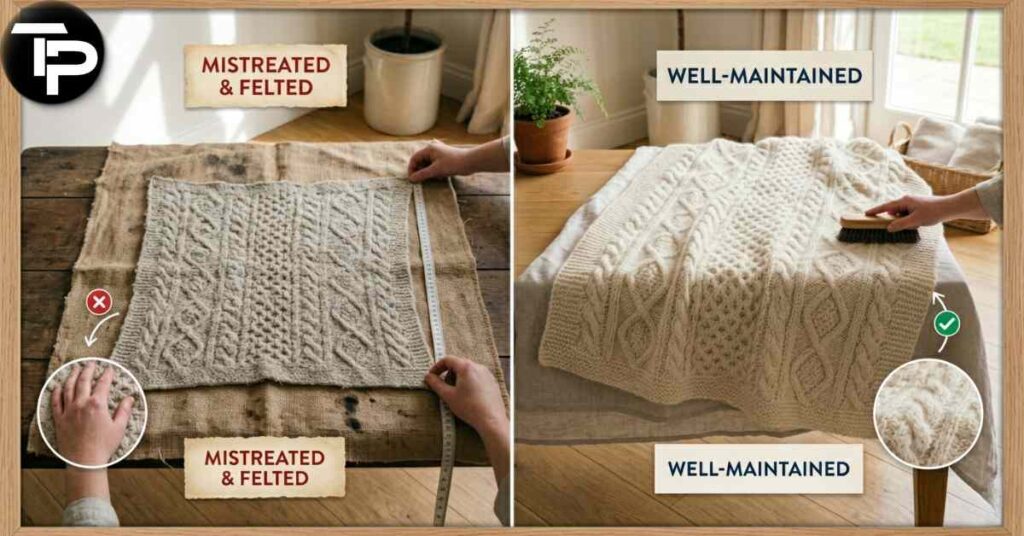
Military surplus wool blankets are a category of their own. These are typically woven much tighter and heavier than standard household wool blankets — often made from coarser, more durable wool grades designed for outdoor field use.
The good news is that a military surplus wool blanket or surplus wool blanket can usually handle slightly more than a fine merino or alpaca piece. The tighter weave means less risk of felting from mild agitation. But the same basic rules still apply — cold water, gentle cycle, wool-safe soap.
Special Considerations for Military Surplus Wool
Many vintage military surplus wool blankets have never been washed and may have years of storage odors, dust, and lanolin buildup. Before machine washing, shake the blanket outside thoroughly and air it out for 24 hours in a well-ventilated spot. This alone removes a significant amount of surface dust and odor.
For heavy odor removal, add half a cup of white distilled vinegar to the cold wash water. Vinegar neutralizes musty smells and is completely safe for wool fibers at this dilution. Do not use baking soda — it can disrupt the pH of wool and cause dullness over time.
Because surplus wool blankets are heavier when wet, make sure your washing machine can handle the weight. Overloading a machine with a soaked surplus blanket strains the motor and does not allow the blanket to rinse properly. If the blanket fills more than half your drum dry, hand wash it in a bathtub instead.
How to Wash an Alpaca Wool Blanket

An alpaca wool blanket requires the most gentle handling of all wool types. Alpaca fiber is finer and softer than sheep’s wool, which makes it both luxuriously comfortable and more vulnerable to heat and agitation damage.
Most quality alpaca wool blankets sold in the US come with a hand wash or dry clean only label. Take that seriously. Machine washing an alpaca blanket — even on a delicate cycle — carries a real risk of permanent fiber damage.
Best Approach for Alpaca
Hand wash in cold water with a pH-neutral wool shampoo. Baby shampoo works in a pinch because its gentle formula is close enough to wool-safe detergents. Soak for no more than 15 minutes and use zero agitation — just gentle submersion and pressing.
Alpaca dries faster than sheep’s wool because it does not contain lanolin, the natural oil that holds moisture. Lay flat on a clean towel away from direct sunlight or heat sources and reshape gently while still damp. It will be ready in a few hours on a warm day.
Drying a Wool Blanket Correctly
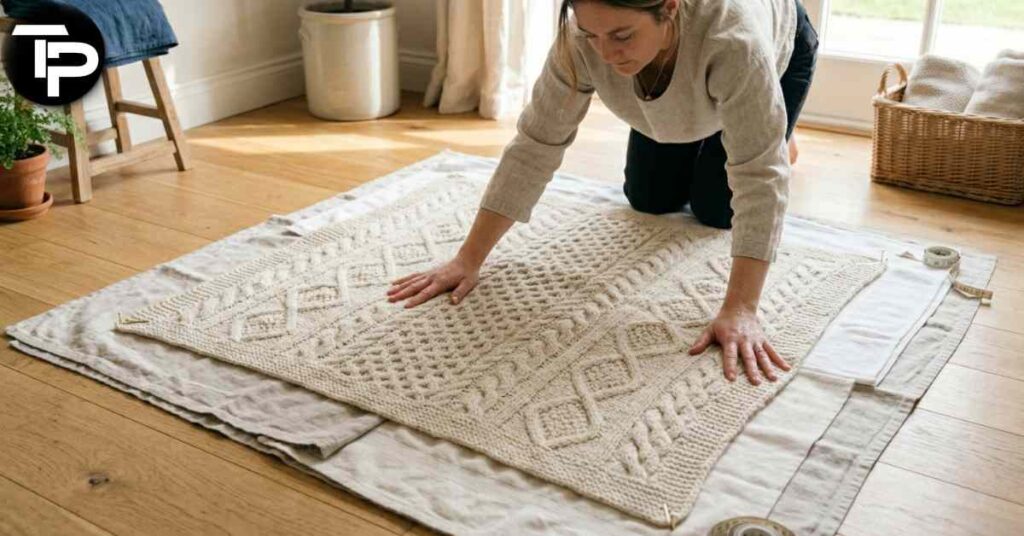
Drying is where most people make their second big mistake — right after using hot water in the wash. The dryer is almost always the wrong choice for wool.
The Right Way to Dry Wool
- Lay the blanket flat on a clean dry surface — a drying rack, a clean floor, or a table covered with towels
- Reshape the blanket gently while still damp to restore its original dimensions
- Flip it every few hours so both sides dry evenly
- Keep it away from direct sunlight which fades color and dries fibers too fast
- Keep it away from heat vents, radiators, and space heaters for the same reason
- Allow 24 to 48 hours for a thick wool blanket to dry completely before folding
If you must use a dryer — for a very coarse surplus wool blanket that the manufacturer permits machine drying — use the air-dry setting with zero heat. Tumble on air only for 20 minutes, then pull out and lay flat to finish drying. Never use a heated dryer cycle on wool of any grade.
How Often Should You Wash a Wool Blanket
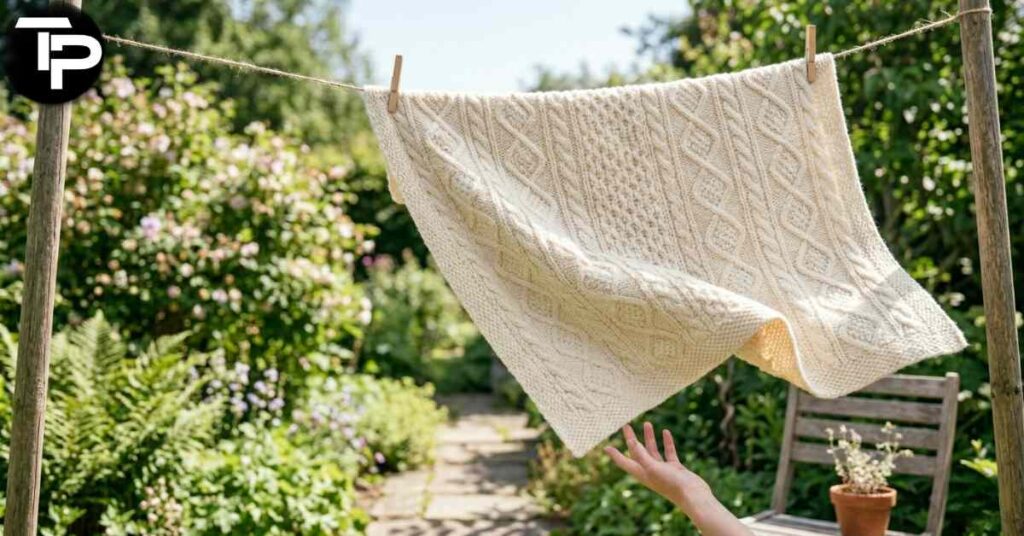
Less often than you think. Wool is naturally odor-resistant and has antimicrobial properties that make it far cleaner between washes than cotton or synthetic blankets. Most wool blankets used as throws or bed covers only need washing two to three times per year at most.
Between washes, air your blanket outside on a dry day for a few hours. This refreshes the fibers, removes surface dust, and keeps odors from building up. A light brush with a soft lint brush removes pet hair and surface debris without putting the blanket through a wash cycle.
Over-washing wool shortens its life significantly. Each wash cycle — even a gentle one — puts some stress on the fibers. The fewer times you wash it, the longer it lasts.
Frequently Asked Questions
How do you wash a wool blanket without shrinking it?
Use cold water only, a wool-safe detergent, and the gentlest cycle your machine has.Warm or hot water will cause wool fibers to shrink and become entangled when used. If you are unsure, hand wash instead. Cold water and minimal agitation are the two non-negotiables for washing any wool blanket safely.
Can you machine wash a military surplus wool blanket?
Most military surplus wool blankets can handle a cold gentle machine cycle because they are woven from coarser, tighter wool designed for durability. Air the blanket out first to remove storage dust and odors. Use a wool-safe detergent, cold water, and the lowest spin speed. Check that your machine can handle the weight of a wet surplus wool blanket before starting.
How do you wash a surplus wool blanket that smells musty?
Air it outside for 24 hours first — this alone removes most storage odors. Then hand wash or machine wash on cold gentle with half a cup of white distilled vinegar added to the water. Vinegar neutralizes musty smells without damaging wool fibers. Rinse thoroughly in cold water and dry flat in a well-ventilated area away from direct heat.
How do you wash an alpaca wool blanket at home?
Hand washing is almost always the right choice for an alpaca wool blanket. Fill a tub with cold water and a small amount of pH-neutral wool shampoo. Soak for 15 minutes with no rubbing or wringing. Press gently to rinse, remove excess water with a towel roll, and dry flat away from sunlight and heat. Alpaca dries faster than regular wool and should hold its shape well if handled gently throughout.
Can a wool blanket be dried in the dryer?
Almost never. Heat causes wool to shrink and felt permanently. The only exception is a coarse wool blanket whose care label specifically permits machine drying — in that case, use the air-dry setting with zero heat and remove while still slightly damp. For any fine wool, merino, or alpaca blanket, always dry flat at room temperature.
Wash It Right and It Lasts a Lifetime
Knowing how to wash a wool blanket properly is what separates a blanket that lasts twenty years from one that ends up in the donation bin after a single bad laundry cycle. Cold water, gentle handling, wool-safe detergent, and flat drying — those four things cover ninety percent of what you need to know.
Whether you are caring for a heavy military surplus wool blanket that has been around since the Cold War, a thrifted surplus wool blanket with years of character, or a soft alpaca wool blanket you paid good money for — the investment of doing it right is always worth it.
Wool does not need to be washed often. When it does, treat it gently and it will reward you with decades of warmth. Treat it carelessly once and the damage is permanent. Take the extra fifteen minutes. Your blanket will thank you for years to come.